Thrive Tracker
A private, AI-built app that turns scattered work into review-ready evidence, and that leadership asked me to share.
My role
Product owner, designer, and tester. I directed an AI app builder to write the code.
Timeline
First release Nov 3, 2026. Ten releases in nine days.
Users
Me, then the OCIO core team, then ~30 colleagues across my manager's org.
Status
Live, private, and in daily use.
10h → 15m
Review prep, from 1–2 weeks of digging to one short session
~30
Colleagues using it after my manager asked me to roll it out
10 in 9
Releases in nine days, each one approved by me first
The problem
Performance reviews ask for evidence of impact, but the evidence lives in email, decks, meeting notes, and memory. My first tracker helped, but it had gaps that would have cost me in a review.
It had no fiscal calendar, so 12 of 14 dated entries carried the wrong quarter. Impact was often described as activity instead of results. And every review draft started from a blank page.
My approach
1. Define good evidence first
Outcomes beat activity. Tangible feedback with clear expectations was the driver.
2. Design before code
I approved a design system, with live contrast checks, before any features were built.
3. Keep a human in the loop
The app finds wins in my mail and meetings, but nothing is added until I approve it.
4. Verify, don't assume
I checked quarter dates against company fiscal calendars and tested real data before building on it.
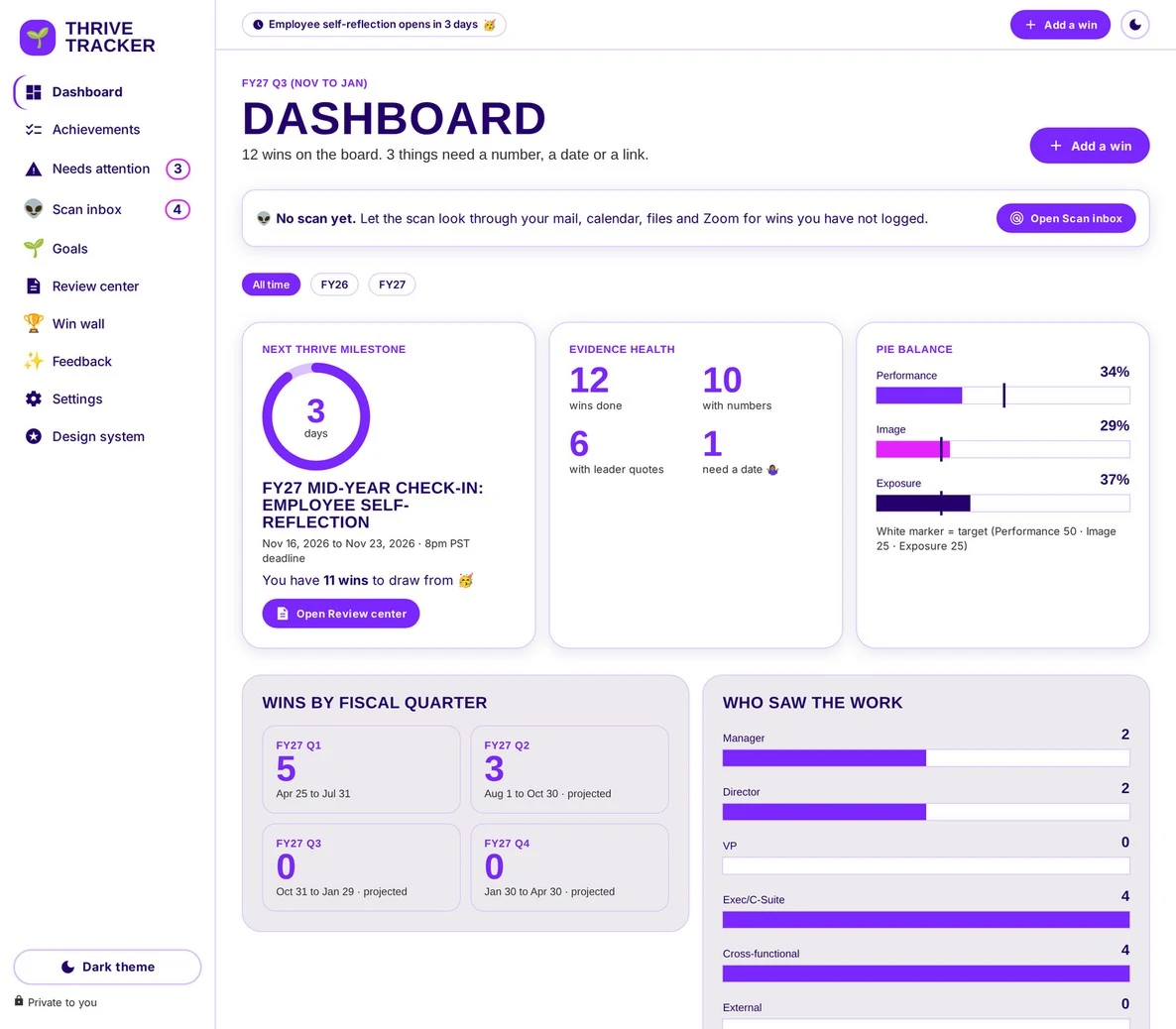
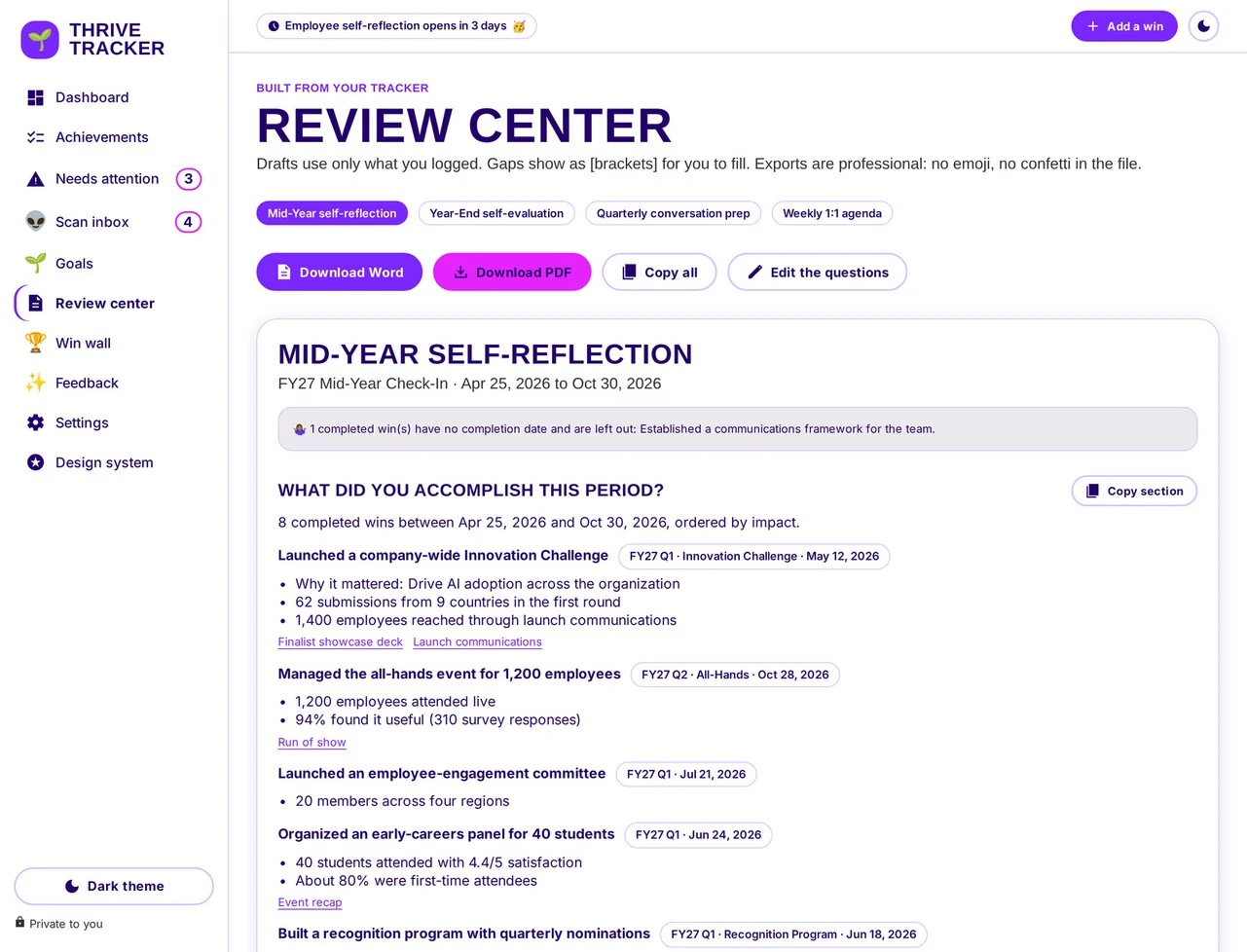
Screens show sample data.
What I learned
Directing an AI builder is product management: clear acceptance criteria, approval gates, and realistic test data.
Have the awareness to understand where you need help. Say plainly what's automated and what isn't. People trust a tool that shows its evidence.